One outplacement process is a carefully supervised process in which an employee is helped to move to new work after dismissal or reorganization.
At Care4Careers each process is customized - tailored to the person, the situation and the goal.
But at its core, each process takes place in a number of recognisable phases. Below, we explain step by step how outplacement works.
What is an outplacement process?
Outplacement is professional guidance to a new job for employees who lose their jobs.
The goal: to help people process their dismissal, rediscover their talents and take the next step with confidence.
The phases of an outplacement process
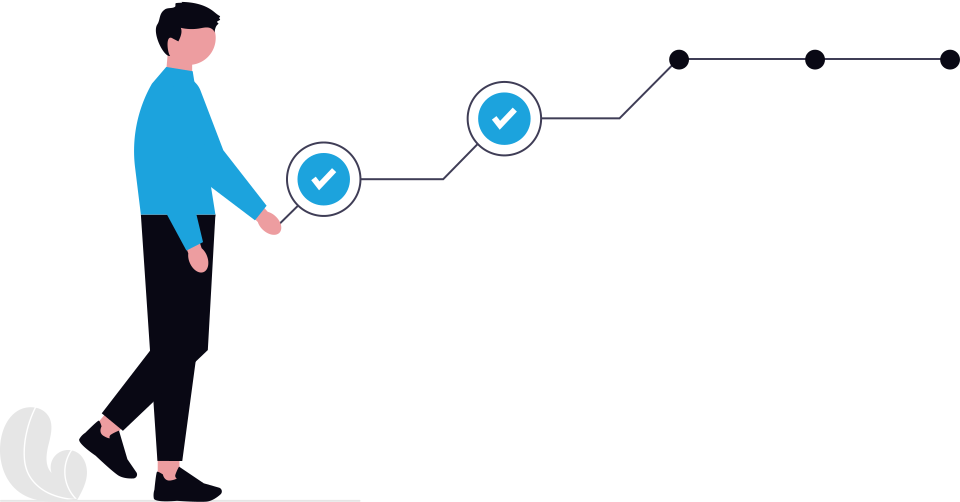
At Care4Careers, a process takes place in five logical, mutually reinforcing phases.
Each step brings the participant closer to sustainable new work.
Phase 1 - Intake and goal setting
The process starts with a personal intake interview.
We discuss the situation, wishes, expectations and any obstacles.
Together with the participant, the coach sets concrete goals:
- What do I want to achieve?
- Where am I now?
- What do I need to be able to grow again?
This forms the basis for a customized plan that suits the person, the employer and the labor market.
Phase 2 - Self-Analysis and Career Orientation
In this phase, the coach helps the employee to gain insight into talents, motives and work preferences.
This is done through tests, conversations and reflection exercises.
You’ll discover what you’re good at, what gives you energy and what type of work best suits your personality.
Also read: Outplacement or career guidance - what’s right for you?
Phase 3 - Labour market exploration
Together with the coach, you will explore the labor market and determine a strategy:
- Which features fit my profile?
- Which sectors offer opportunities?
- How do I use my network effectively?
We look at vacancies, employers and trends in the labor market.
This creates a realistic and concrete action plan towards a new job.
Also read: Who is outplacement for?
Phase 4 - Job counseling
Once the direction is clear, the step towards active application guidance follows.
The coach helps with:
- Writing a strong resume and cover letter
- Improving your LinkedIn profile
- Preparation for job interviews and network interviews
- Personal presentation and profiling
Hint: We offer practical application training courses that focus on self-confidence, structure and conviction.
Also read: Outplacement coaching - what is it and what does it deliver?
Phase 5 - Job hunting and aftercare
The final phase revolves around concrete placement and aftercare.
The coach actively supports finding suitable vacancies and maintains contact until the employee has found a new job.
Even after that, we remain involved to prevent relapse and ensure a sustainable start.
How long does an outplacement process take?
On average, a process takes 3 to 9 months, depending on:
- Length of employment
- The labour market situation
- Personal resilience
- The complexity of the profile
At Care4Careers, we do not work with fixed packages, but with commitment to placement.
The process continues until the employee has found sustainable new work.
What does an outplacement process provide?
A well-supervised process offers both employee and employer clear advantages:
| Benefits for Employees | Benefits for Employers |
|---|---|
| Greater self-confidence and direction | Demonstrates social and responsible leadership |
| Improved job application and networking skills | Reduced legal risks and fewer conflicts |
| Sustainable re-employment in a suitable role | Enhanced employer reputation and goodwill |
| Renewed energy and motivation | Creates stability during organisational change |
Outplacement at Care4Careers: always customized
At Care4Careers we don’t believe in standard solutions.
Every situation is unique - that’s why we tailor each process to the person and the organization.
Our experienced coaches guide participants with attention, structure and realistic goals.
Whether it’s a single employee or a collective reorganization:
we make sure people don’t fall, but land.
Part ofOutplacement in practice
About the author

Program Designer & Project Lead
With over 30 years of experience in HR, project management, and career development, I enjoy working at the intersection of strategy and implementation, always balancing organizational goals with human perspective.
View profile