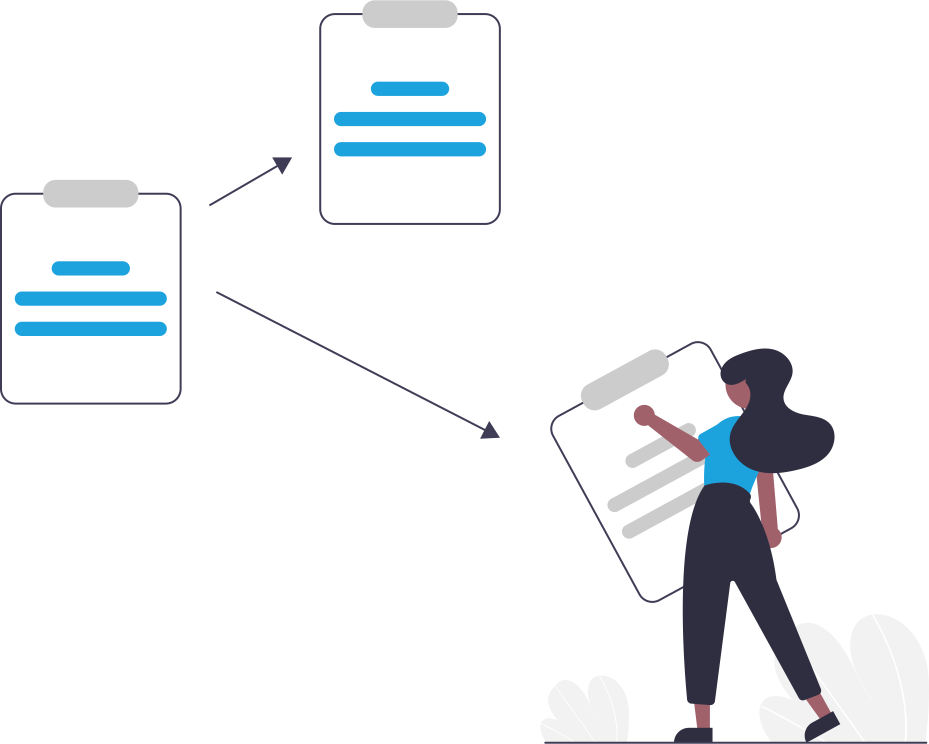
A reorganization always impacts employees. Not only those who lose their jobs, but also those who remain. Uncertainty, changing roles and increased pressure within teams often lead to stress and disruption.
In this article, you will learn what a reorganization means for employees, the impact it has on individuals and teams, and why structured support, including for employees who stay, is essential.
What does a reorganization mean for employees?
A reorganization involves structural changes within an organization, often aimed at improving efficiency, reducing costs or shifting strategic direction.
For employees, this typically means:
- changes in roles or responsibilities
- potential job loss or uncertainty about employment
- restructuring of teams
- increased workload
A reorganization rarely affects only a small group. It usually influences the entire workforce.
Impact of reorganization on employees
The impact of a reorganization on employees is often underestimated.
Direct effects
- uncertainty about job security
- increased stress levels
- reduced motivation
- lower productivity
Indirect effects
- loss of trust in the organization
- disruption within teams
- departure of valuable employees
These indirect effects can have long-term consequences for organizational performance.
Fear culture during reorganization: an underestimated risk
Reorganizations can lead to a fear-driven culture within teams. Employees may feel unsure about their future, which influences behavior and performance.
Signs of a fear culture include:
- employees speaking up less
- avoidance behavior and reduced initiative
- focus on job security rather than performance
- internal competition
This type of culture is not only caused by layoffs, but mainly by ongoing uncertainty and lack of clarity.
Support is not only for employees who leave
During a reorganization, the focus is often on employees who exit the organization. However, those who stay frequently need support as well.
Reasons include:
- they experience the same uncertainty
- their roles often change significantly
- workload may increase
- trust in the organization can decline
Providing support for remaining employees is therefore essential.
Structured support such as career coaching for employees and employers helps individuals regain direction, build confidence and adapt to new situations.
Reorganization employees and responsible employer practice
How an organization handles employees during a reorganization reflects its approach to employer responsibility.
Responsible employer practice includes:
- transparent communication
- clear expectations
- structured support during change
- attention for both departing and remaining employees
For employees leaving the organization, a structured transition is key. This can be supported through outplacement for employers, where employees are guided toward new employment opportunities.
Reorganization and dismissal: structured support
When a reorganization leads to dismissal, it is important to manage the process carefully.
A structured approach includes:
- clear communication about decisions
- support in processing change and exploring options
- guidance toward new employment
The practical implementation is described in outplacement during restructuring.
How to reduce the negative impact on employees
The impact of a reorganization cannot be eliminated, but it can be managed.
Key factors
- timely and transparent communication
- clear structure and planning
- space for questions and feedback
- professional guidance
Supporting employees actively prevents uncertainty from turning into long-term disengagement.
When is additional support needed?
Additional support becomes important when:
- uncertainty continues over a longer period
- teams are reorganized
- employees take on new roles
- stress levels increase or absence rises
In some cases, reintegration may be required, for example when employees experience burnout or long-term stress. In such situations, a program like second-track reintegration can be relevant.
Conclusion
A reorganization affects all employees, not just those who leave. Uncertainty, changing roles and pressure within teams can lead to stress and even a fear-driven culture.
By investing in support, through outplacement and career coaching, organizations create stability, maintain trust and ensure a healthier work environment during periods of change.
Een goed begrip van de gevolgen van reorganisatie kan helpen om de bijbehorende onzekerheid voor medewerkers te verminderen.
Frequently asked questions about reorganization employees
What is the impact of a reorganization on employees?
It often leads to uncertainty, stress and changes in roles and team structures.
Do only departing employees need support?
No, employees who remain often need guidance as well.
How does a fear culture develop during reorganization?
Through uncertainty, lack of communication and increased pressure.
How can employees be supported during reorganization?
Through clear communication, structure and professional support such as coaching or outplacement.
What is the role of the employer during a reorganization?
To provide clarity, guidance and a structured process for all employees.
Part ofReorganisation & redundancy
About the author

Program Designer & Project Lead
With over 30 years of experience in HR, project management, and career development, I enjoy working at the intersection of strategy and implementation, always balancing organizational goals with human perspective.
View profile