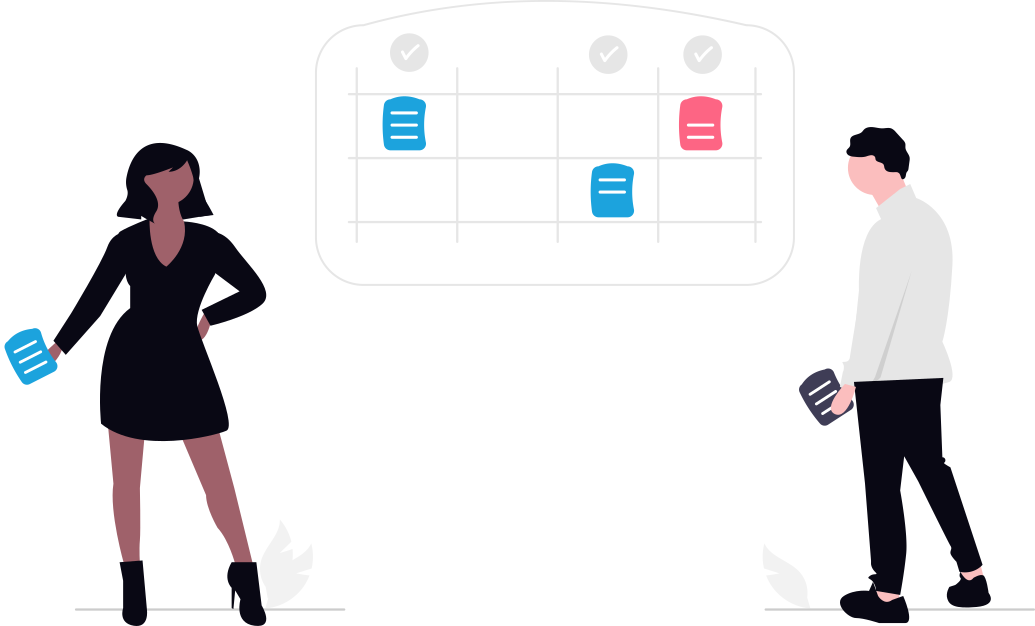
A reintegration coach guides employees who have (temporarily) dropped out towards a sustainable return to work, inside or outside their own organization.
When an employee is ill for a long time, the question often arises how and when returning to work will be possible again. A reintegration coach offers personal guidance in this regard, tailored to the resilience, the possibilities and the obligations under the Gatekeeper Improvement Act.
What does a reintegration coach do?
A reintegration coach supports both the employee and the employer in the entire process of returning to work. This includes drawing up a reintegration plan, having discussions about opportunities and limitations, finding suitable work and removing barriers. This may include adjustments to the current position, but also a switch to another company or sector.
In the event of a long-term failure, a reintegration coach can play an important role in the so-called second track route. This looks at work outside your own organization when returning to the current employer is not feasible. A comprehensive overview of this can be found in what is a track 2 trajectory.
Who is a reintegration coach for?
A reintegration coach is for employees who, due to illness, burn-out or other circumstances, are not or are temporarily employable. Employers also benefit from the use of a coach: it prevents errors in the reintegration process and helps to avoid a wage penalty from the UWV.
Examples where a reintegration coach is called in:
- Employees who want to return to work after a long illness.
- Employees for whom no suitable work is available internally.
- Employers who need support with their legal obligations.
- Situations where independent advice and guidance are desirable.
Benefits of reintegration coaching
The use of a coach has advantages for both parties:
- For employees: structure, personal attention and help to regain energy and job satisfaction.
- For employers: expert guidance, preventing legal risks and fulfilling good employment practices.
Because reintegration is often complex, it is important that guidance is professional and independent.
Reintegration coach and Gatekeeper Improvement Act
The role of a reintegration coach is closely related to the legal frameworks. Employer and employee are obliged to work together to return to work. The Gatekeeper Improvement Act requires that this process is carefully recorded and implemented. A coach can support this by providing an overview and monitoring all steps in a timely manner. If you want to know how this process works in practice, read what is second track reintegration.
More information at the UWV
The official rules and current amounts or deadlines are available at UWV about reintegration. These can change, so always check them at the source itself for a concrete situation.
Summary - the role of a reintegration coach
A reintegration coach helps employees return to work smoothly and sustainably, with an eye for both personal resilience and legal obligations. For employers, using a coach means expert guidance, fewer risks and a respectful approach to employees.
Een re-integratie coach kan waardevolle ondersteuning bieden bij het proces van re-integratie tweede spoor.
Frequently Asked Questions
What does a reintegration coach do?
They guide employee and employer through the whole process of returning to work: drawing up the plan, the conversations about what is still possible, and the coordination with the parties involved.
Who is a reintegration coach for?
For employees who are unfit or partly fit for work through illness or burnout, and for employers who want to avoid mistakes in the process. Both sides benefit.
What is the difference between a reintegration coach and a career coach?
A reintegration coach works within the framework of the Gatekeeper Improvement Act, with obligations and deadlines. A career coach guides direction and development, separate from illness or dismissal.
When do you bring in a reintegration coach?
As soon as it becomes clear that recovery is taking longer and a return to the employee's own work is uncertain. Starting early saves time in the file and keeps the employee engaged.
Part ofSecond track in practice
Sources
The legal statements in this article are based on the sources below. Legislation changes; always check the current text for your own situation.
- UWV. (n.d.). Re-integratie bij ziekte. Retrieved on 13 August 2026, from www.uwv.nl/nl/ziek/re-integratie
About the author

Program Designer & Project Lead
With over 30 years of experience in HR, project management, and career development, I enjoy working at the intersection of strategy and implementation, always balancing organizational goals with human perspective.
View profile